READ
Tell the Truth and Run

|
|
 |
He
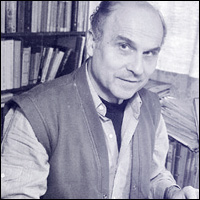 called it "literature by foot," and there was certainly a lot of literature and a lot of walking in his books. But no one, not even him, ever came up with an exact term to describe the genre he probably invented. He liked to say that Herodotus was the first great journalist of his type, but the precedent doesn't quite fit his own writing. Some called it New Journalism, alluding to the style of Truman Capote, Joan Didion and Tom Wolfe, but, although he employed literary techniques to tell real-life stories, he was more interested in the stories he told than how he told them.
Whatever one calls the genre cultivated by acclaimed journalist Ryszard Kapuscinski, who passed away in Poland a few days ago, no imitator came close to his art. To say that he was a masterful chronicler of the revolutions, famines, civil wars and imperial breakdowns of the last half-century in Africa, Asia and Latin America is to state the obvious. He did more than that.
Kapuscinski once described his work with a Latin phrase -- silva rerum, the forest of things. It's an appropriate metaphor. His tale of the fall of Ethiopia's emperor Haile Selassie, his description of the end of the Shah of Iran and his journey across a Soviet Union at the point of collapse -- three of his books -- have no real beginning or ending. The author does not attempt to convey the totality of the events he is narrating; he is interested only in the details he personally experiences or hears from those who experience them. No one, he seems to be saying, can grasp the enormousness of any historical event.
|